



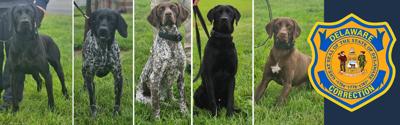
DELAWARE- The Delaware Department of Correction is shifting all of its K-9 teams statewide to focus solely on detecting drugs and other contraband, in an effort to improve safety inside its facilities.
The change is part of a broader strategy to prevent the flow of illegal substances and dangerous items behind bars. DOC officials say the transition is already underway and will continue over the next year, mostly through natural attrition as current patrol dogs retire.
“This transition aligns with national best practices and supports our goal of keeping everyone in our correctional system safe,” said DOC Commissioner Terra Taylor. “It also directly addresses the ongoing threat of illegal contraband.”
Currently, Delaware DOC has 28 K-9 teams — 18 of them focused on patrol and security duties, and 10 dedicated to detection.
The department will phase out the patrol dogs, which are trained for perimeter security and crowd control, and replace them with detection dogs that can safely work among people inside housing units, entry points and even individual cells.
Unlike patrol dogs, detection dogs are trained to be more social and less aggressive. Their heightened sense of smell helps sniff out narcotics, electronic devices and other prohibited items on people, property and vehicles.
The transition also comes with some practical benefits. Detection dogs require shorter training periods — about 12 weeks compared to 14 for patrol dogs — and lower home kennel requirements. They also cost about the same to acquire and train.
As part of the transition, two young patrol dogs are being swapped out for detection dogs. All retiring K-9s are placed with adoptive families and supported through a state law passed in 2023, which provides financial aid for their care.
DOC leaders say this shift is possible thanks to major investments in recent years, including thousands of new surveillance cameras, intelligence-sharing systems, de-escalation training for officers, and additional non-lethal tools for security.
