



BUNIA, Congo (AP) — The Ebola outbreak in eastern Congo is worsening food insecurity in a country already battling with one of the world's largest humanitarian crises, the head of the U.N. food agency told The Associated Press on Wednesday.
Speaking during a visit to Ituri province, Carl Skau, acting executive director of the World Food Program, described the outbreak as a “crisis on top of a crisis” that has compounded a catastrophic situation with over five million Congolese already experiencing emergency-level food insecurity.
A long-running conflict in eastern Congo has driven nearly 10 million people into crisis or emergency levels of hunger, with Ituri province — the epicenter of the Ebola outbreak — among the most affected with 1.9 million of them, according to the WFP.
Across some 48 health zones affected with Ebola, more than 2.7 million people face acute food insecurity, including 628,000 in emergency conditions, it added.
“Now with Ebola crisis, this is getting worse. Markets are impacted, supply routes are impacted and so people are struggling even more to have enough to eat,” Skau told the AP.
Ebola is driving up malnutrition in affected localities
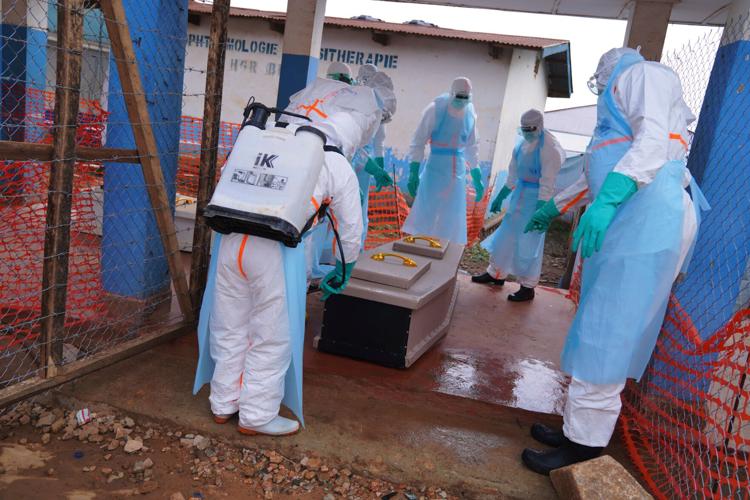
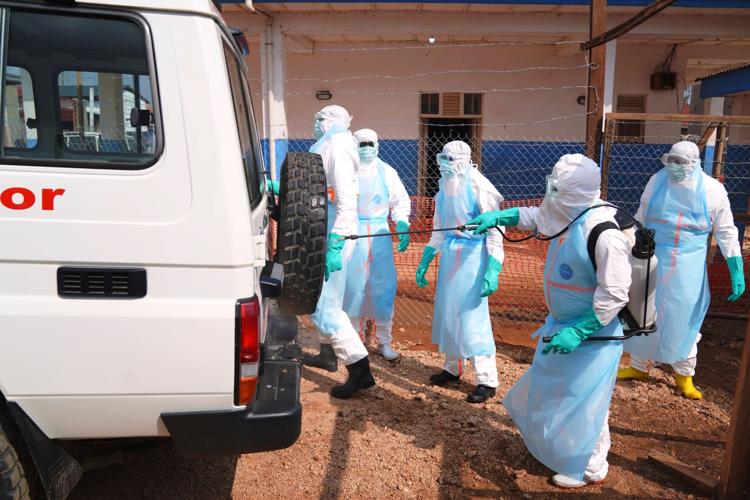
The ongoing Ebola outbreak, considered the fastest in history, has recorded 3,360 confirmed cases, including 1,487 deaths since it was declared on May 15.
Measures introduced to slow the spread — including border closures and restriction of movements and large gatherings — have disrupted life and businesses, driving up food and fuel prices, the WFP has said.
The U.N. food agency said it has so far delivered more than 160,000 hot meals to patients, contacts and front line workers in 17 treatment and isolation centers.
In Mongbwalu, a mining town at one of the epicenters of the outbreak, residents said Ebola and the measures introduced to fight it has made it difficult for some families to feed their children.
Kahambu Deborah, a 40-year-old mother of six, said she had been struggling to access her farmland due to rebel violence, and that the restrictions linked to Ebola had made things more challenging.
“Accessing food here is one of the hardest things we’ve had to deal with recently. Sometimes, because of the insecurity, we can’t even go to our fields, and our children are suffering as a result,” she said.
‘Limit the movement of people’
Dr. Richard Lokudu, director-general of the Mongbwalu General Hospital, said health workers are seeing more malnutrition cases in the region compared to before the outbreak, “even at the Ebola treatment center.”
In Mongbwalu, the U.N. agency's food support program has helped to “limit the movement of people seeking the means to survive,” said Tourne Kasereka, a monitoring assistant with the WFP.
The outbreak has been particularly difficult to fight because the Bundibugyo virus responsible for it has no approved vaccines or treatments, unlike most of Congo’s past outbreaks.
Officials have warned that it continues to spread faster than health officials can track despite an expanding response.
A critical aspect of that response is getting food to those in need of it, according to Skau.
“The World Food Program needs resources (and) donors to step up so that we can do more, to alleviate the pressures on the people here in Ituri,” he added.
