



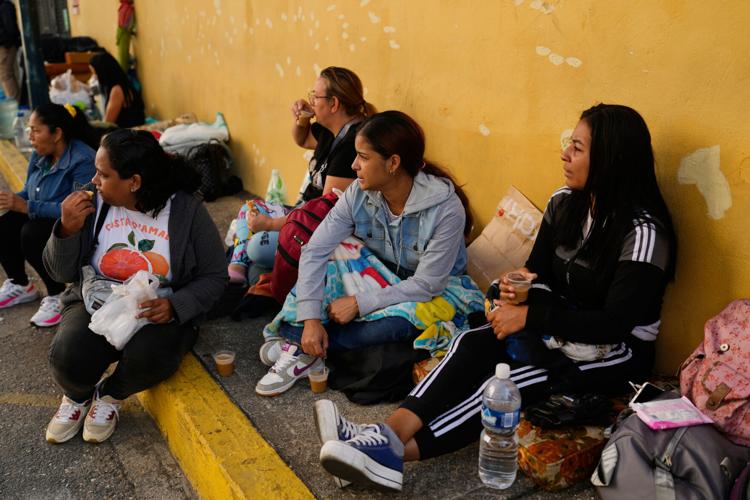
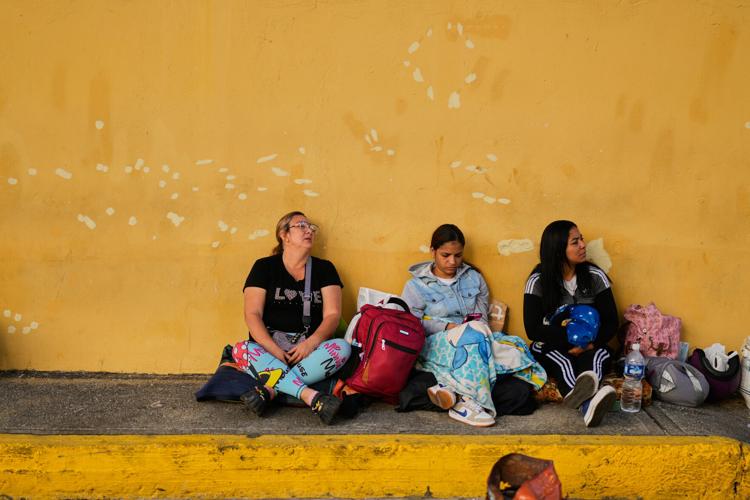
CARACAS, Venezuela (AP) — Yaxzodara Lozada woke up Monday freezing after sleeping on the sidewalk outside a prison in Venezuela’s capital, hoping her husband, a police officer who was detained on Nov. 17, will walk free as part of a goodwill effort the government announced last week.
While Venezuelan commerce and daily life have begun to resume — with malls, schools and gyms reopening a week after a stunning U.S. attack led to the arrest of President Nicolás Maduro — the promised release of imprisoned opposition figures, civil society leaders, journalists and more remains stalled.
Relatives of many of the more than 800 people that human rights organizations say are imprisoned in Venezuela for political reasons began gathering outside prisons Thursday, when the government of acting President Delcy Rodríguez pledged to free a significant number of prisoners in what it described as a gesture to “seek peace.” Officials have not identified or given a number of prisoners being considered for release, leaving rights groups scouring for hints of information and families to wait anxiously.
As of Monday morning, Foro Penal, a Venezuelan advocacy group for prisoners, had confirmed the release of 41 prisoners. Also on Monday, the White House confirmed that Venezuelan opposition leader María Corina Machado is set to meet with U.S. President Donald Trump at the White House on Thursday,
Over the weekend, Trump said the releases came at Washington’s request.
“Venezuela has started the process, in a BIG WAY, of releasing their political prisoners,” Trump wrote Saturday on his Truth Social platform.
Lozada said she had not seen her husband, a police officer, since he was detained on Nov. 17 — an arrest for which she says no reason was ever given.”
Next to her, relatives of other detainees stretched and looked for water after spending the night on the ground, using old couch cushions and pieces of foam. In front of them, cars kept going by to drop off students at a school adjacent to the prison.
“These are two realities. They want the world to see that everything is normal, that nothing happened here,” said Jenny Quiroz, whose husband was detained Nov. 26 at his pharmacy in Caracas for allegedly criticizing the government in a WhatsApp group. “But it’s a mixture of anguish, despair…. You know what it’s like to have 48 days without knowing if he eats, if they have him isolated, if they are psychologically or physically torturing him?”
Quiroz said she wanted Trump to know that the information he is receiving regarding prison releases “is not 100% true.”
As relatives awaited news of their loved ones at prisons, the government deployed security forces to public schools around the country for the first day of classes since the holiday break. Uniformed students walked the streets of Caracas some alone and others accompanied by adults.
Teachers braced for questions from students about the Jan. 3 attack. But preschool teacher Ángela Ramires said the topic did not come up in her classroom.
“I didn’t address it because I didn’t notice the interest and a need in them to know what’s going on,” she said. “They are happy to be back at school."
Follow AP’s coverage of Latin America and the Caribbean at https://apnews.com/hub/latin-america