



DUBAI, United Arab Emirates (AP) — Intense Iranian fire targeted the Gulf Arab states early Saturday as Israel and the United States kept up their airstrikes targeting the Islamic Republic.
There was no foreseeable end to the fighting. U.S. President Donald Trump's administration approved a new $151 million arms sale to Israel after Trump said he would not negotiate with Iran without its “unconditional surrender” and U.S. officials warned of a forthcoming bombing campaign they said would be the most intense yet in the weeklong conflict.
Iran's U.N. ambassador said the country would “take all necessary measures” to defend itself.
Associated Press video showed explosions flashing and smoke rising over western Tehran as Israel said it had begun a broad wave of strikes. Also early Saturday, loud booms sounded in Jerusalem and incoming missiles from Iran had people heading to bomb shelters across Israel.
There were no immediate reports of casualties by Israel’s emergency services.
In a sign of the widening nature of the conflict, sirens sounded early Saturday in Bahrain as Iranian attacks targeted the island kingdom. And Saudi Arabia said it destroyed drones headed toward its vast Shaybah oil field and shot down a ballistic missile launched toward Prince Sultan Air Base, which hosts U.S. forces.
The U.S. and Israel have battered Iran with strikes, targeting its military capabilities, leadership and nuclear program. The stated goals and timelines for the war have repeatedly shifted, as the U.S. has at times suggested it seeks to topple Iran’s government or elevate new leadership from within.
Qatar’s energy minister, Saad al-Kaabi, warned in an interview with the Financial Times that the war could “bring down the economies of the world,” predicting a widespread shutdown of Gulf energy exports that could send oil to $150 a barrel.
The price for a barrel of benchmark U.S. crude rose above $90 on Friday for the first time in more than two years.
Russia is providing information to Iran, officials say
Russia has provided Iran with information that could help Tehran strike American warships, aircraft and other assets in the region, according to two officials familiar with U.S. intelligence on the matter.
The people, who were not authorized to comment publicly and spoke on the condition of anonymity, cautioned that the U.S. intelligence has not uncovered that Russia is directing Iran on what to do with the information.
Still, it’s the first indication that Moscow has sought to get involved in the war.
Trump says US will help rebuild Iran once it has ‘ACCEPTABLE’ leaders
In a social media post Friday, Trump said “There will be no deal with Iran except UNCONDITIONAL SURRENDER!" After a surrender, “and the selection of a GREAT & ACCEPTABLE Leader(s),” he wrote, the U.S. and its allies will help rebuild Iran, making it “economically bigger, better, and stronger than ever before.”
Those comments were likely to raise further questions about the endgame of the war. The fighting has killed at least 1,230 people in Iran, more than 200 in Lebanon and around a dozen in Israel, according to officials in those countries. Six U.S. troops have been killed.
Iranian President Masoud Pezeshkian wrote on social media that “some countries” had begun mediation efforts, without elaborating.
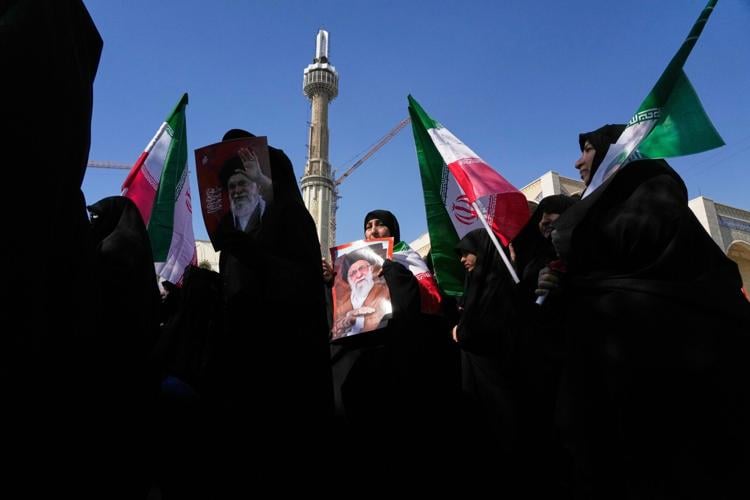
Iranian state television reported Friday that a leadership council had started discussing how to convene the country’s Assembly of Experts, which will select the new supreme leader.
US official warns that ‘biggest bombing’ is coming
U.S. Treasury Secretary Scott Bessent said in a television interview on Friday that the “biggest bombing campaign” of the war was still to come.
Israel has said that over the past week it has heavily bombed an extensive underground bunker that Iranian leaders had planned to use during the hostilities.
New information surfaced suggesting that a deadly Feb. 28 explosion at a school in the Iranian city of Minab, some 1,100 kilometers (680 miles) southeast of Tehran, was likely caused by U.S. airstrikes. The information included satellite images, expert analysis, a U.S. official and public information released by U.S. and Israeli military forces.
Iranian state media has said more than 165 people were killed in the blast, most of them of children.
Iran has blamed Israel and the U.S. for the explosion. Neither country has accepted responsibility, though Defense Secretary Pete Hegseth has said the U.S. is investigating.
Fighting with Israeli troops reported in eastern Lebanon
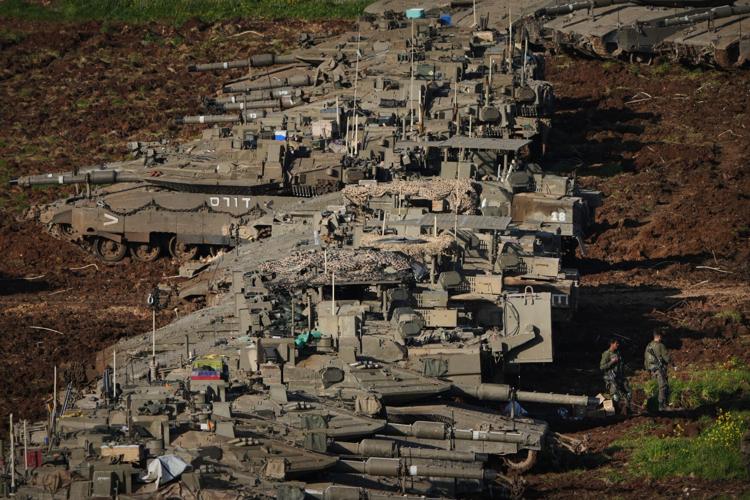
The Iranian-backed militant group Hezbollah said its fighters clashed with an Israeli force that landed late Friday in the mountains of eastern Lebanon. The Lebanese Health Ministry said at least three people were killed.
Israel did not acknowledge the fighting, and its military did not immediately respond to requests for comment.
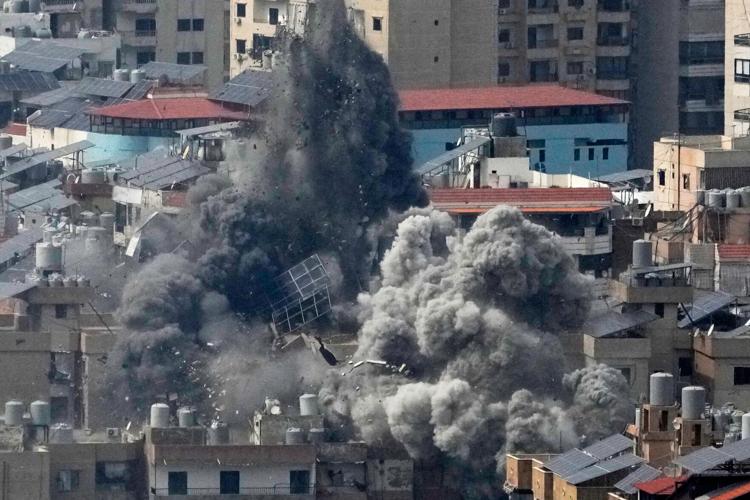
Israel has carried out waves of airstrikes on the southern suburbs of Beirut, where Hezbollah has a large presence but which is also home to hundreds of thousands of civilians.
Lebanon's Health Ministry said at least 217 people have been killed by Israeli strikes since Monday and 798 wounded.
Roads in the Lebanese capital were choked with evacuating traffic as smoke rose over the city’s southern districts. Two hospitals evacuated patients and staff.
“What can we do? We prayed here under the tree. During the night, we slept in the car because there is no place to stay,” Jihan Shehadeh, one of the tens of thousands of displaced, said.
Metz reported from Ramallah, West Bank, Rising from Bangkok and Abou AlJoud from Beirut. Associated Press journalists around the world contributed.