



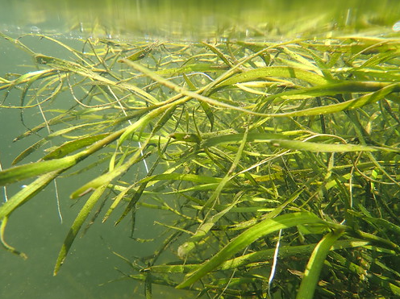

MARYLAND - The Maryland Department of Natural Resources announced Chesapeake Bay underwater grasses expanded nearly 13 percent last year.
The department said, in Maryland's portion of the Bay, underwater grass coverage expanded from 36,799 acres in 2024 to 41,419 acres in 2025. Across the entire Chesapeake Bay, submerged aquatic vegetation reached an estimated 89,385 acres, an increase of 7 percent from 83,252 acres in 2024.
According to the Maryland Department of Natural Resources, the 2025 acreage represents 36 percent of Maryland's 114,065 acre restoration target. The department said this demonstrates meaningful progress and shows opportunity for future continued recovery.
“More underwater grass means more habitat for blue crabs and fish, cleaner water and a more resilient Chesapeake Bay,” said Josh Kurtz, Maryland Department of Natural Resources Secretary. “This year’s increase is welcome progress, but it also reinforces the work ahead. We need to keep reducing pollution, protecting existing underwater grass beds and restoring the shallow-water habitats that allow these plants and the Bay life that depends on them to thrive.”
According to the Maryland Department of Natural Resources, submerged aquatic vegetation beds are among the Chesapeake Bay’s most valuable shallow-water habitats, and provide food, shelter and nursery grounds for fish, blue crabs, waterfowl and other wildlife. They improve water quality by absorbing nutrients and trapping suspended sediment, add oxygen to the water through photosynthesis, help stabilize bottom sediments and reduce shoreline erosion.
The underwater grass beds also store carbon and can help buffer the effects of coastal acidification, which the department said is an important benefit to Maryland’s shellfish industry. Since underwater grasses require clear water to survive, their abundance and distribution are closely tied to water quality and their ability to respond relatively quickly to improving and deteriorating conditions makes them an important indicator of ecosystem health.
"What is especially encouraging about 2025 is that the gains were not confined to one place,” said Brooke Landry, SAV program chief for Maryland DNR and chair of the Chesapeake Bay Program SAV Workgroup. “We saw expansion in both freshwater and moderately salty parts of Maryland’s Bay waters.”
Maryland's tidal fresh and low-salinity waters gained a combined 1,059 acres of SAV in 2025. Seven Maryland river or Bay segments met or exceeded their SAV restoration goals last year. These included:
Northern Chesapeake Bay segment 1: 102 percent of its 754-acre goal
North East River: 179 percent of its 89-acre goal
Upper Chester River: 531 percent of its 1-acre goal
Upper Sassafras River: 275 percent of its 95-acre goal
Bush River: 158 percent of its 350-acre goal
Upper Gunpowder River: 107 percent of its 572-acre goal
Back River: 712 percent of its 30-acre goal
Two freshwater segments were close to their restoration goals. These are the Northern Chesapeake Bay segment 2, which includes the expansive Susquehanna Flats SAV bed, reached 91 percent of its 12,149 acre goal, and Mattawoman Creek, a Potomac River tributary, which maintained 85 percent of its 792 acre goal, despite a 200 acre loss of SAV in the creek.
The annual underwater grass survey is conducted by the Virginia Institute of Marine Science, which maps submerged aquatic vegetation throughout the Chesapeake Bay and its tidal tributaries annually. VIMS also produces a report for Virginia’s portion of the Bay.
