



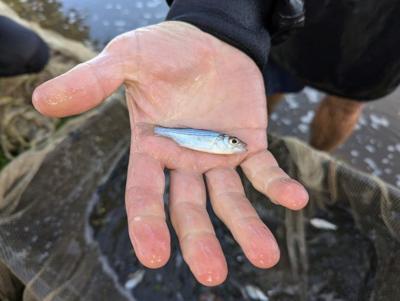
MARYLAND- The Maryland Department of Natural Resources released the results of its 2024 juvenile striped bass survey, showing another challenging year for the fish.
The survey, which tracks how many young striped bass, or rockfish, are born each year in the Chesapeake Bay, recorded a young-of-year index of 2.0. This is significantly lower than the long-term average of 11.0 and marks the sixth straight year of poor reproduction.
“These results underscore the complexity of managing a coastal migratory species whose life-cycle is influenced by environmental conditions during a brief spawning period,” said Maryland DNR Fishing and Boating Services Director Lynn Fegley. “We will continue to explore ways to conserve and enhance the spawning population during this time when we are adding fewer young fish to the population.”
The survey sampled 22 sites across four major spawning areas: the Choptank, Nanticoke, and Potomac rivers, as well as the upper Chesapeake Bay. Biologists used beach seine nets to collect fish, with each site visited three times over the summer. The young striped bass are typically less than 3 inches long and aren’t often caught by anglers.
Along with striped bass, the survey documented over 56,000 fish from 56 different species. Two species lower on the food chain showed encouraging numbers. Menhaden, a key food source for many species, remained at near-record levels, while spot numbers were the highest seen since 1988.
Efforts to rebuild the Atlantic Coast striped bass population have been underway for years, and while there has been some progress, poor reproduction remains a concern.
Maryland has implemented stricter regulations, such as reducing catch limits and increasing protections for spawning fish, but environmental factors—like warm winters—continue to impact the success of striped bass reproduction.
The Virginia Institute of Marine Science conducts a similar survey in the southern Chesapeake Bay.
