



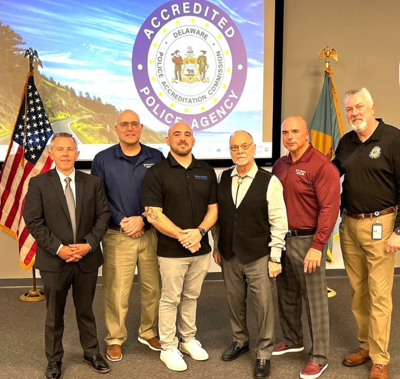

DOVER, Del. — The Delaware Police Officer Standards and Training Commission and the Delaware Police Accreditation Committee announced they recently partnered with Penn Medicine Princeton House Behavioral Health Program to offer wellness training for law enforcement officers across the state.
According to the Delaware Police Officer Standards and Training Commission, the training, titled "My Brother's Keeper," took place April 17 at the Delaware Department of Safety and Homeland Security building in Dover. Officials said approximately 50 participants attended the four-hour session, which was designed to help officers recognize and respond to mental health concerns among their colleagues.
The Delaware Police Officer Standards and Training Commission stated the training was led by a team from Penn Medicine Princeton House Behavioral Health Program, including Dr. Michael Bizzarro, director of clinical services; Ken Burkert, senior outreach coordinator and certified peer recovery specialist; and Rick Zaleski, a retired police sergeant and certified peer recovery specialist.
Officials from the Delaware Police Officer Standards and Training Commission said the program focused on teaching officers how to identify signs of distress, make appropriate peer referrals, connect colleagues to available resources, and foster a culture that prioritizes mental health awareness within law enforcement agencies.
In a statement, Sean Moriarity, executive director of the Delaware Police Officer Standards and Training Commission, said, "Together, we can make sure we are addressing issues surrounding mental health and wellness in law enforcement." Moriarity also said the goal is to reach officers from every law enforcement agency in Delaware, regardless of department size.
According to information provided by the Delaware Police Officer Standards and Training Commission and the Delaware Police Accreditation Committee, law enforcement wellness programs are considered critical to protecting officers’ mental and physical health, preventing suicide, reducing burnout, and supporting family relationships. Officials said such programs can also strengthen community trust and improve operational efficiency.
Officials with the Delaware Police Officer Standards and Training Commission emphasized that peer support programs are delivered by colleagues who understand the specific stressors associated with law enforcement work. According to the commission, officers often encounter traumatic events and life-threatening situations, leading to risks such as PTSD, depression, anxiety and compassion fatigue. Officials said peer programs are intended to encourage early intervention and reduce the likelihood of more serious outcomes, including substance abuse, severe depression and suicide.
Officials with the Delaware Police Accreditation Committee noted that the training helps law enforcement agencies meet the committee’s Standard 7.1.2 for officer wellness. According to the Delaware Police Accreditation Committee, the wellness standard supports the broader goal of full law enforcement accreditation across the state, as required by House Bill 206. The legislation mandates that all police agencies in Delaware achieve accreditation by 2028.
