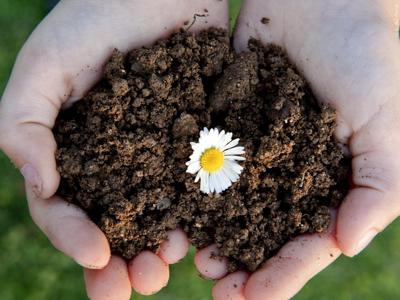
DOVER, Del. - Delaware is considering a groundbreaking bill- except, it may not actually require breaking ground. The bill, House Substitute 1 for House Bill 162, introduces natural organic reduction as a legal and eco-friendly alternative for the handling of human remains.
WHAT IS NATURAL ORGANIC REDUCTION?
Natural organic reduction is a process that accelerates the decomposition of human remains, turning them into soil through the use of large vessels, warm air and organic materials like straw and wood chips. A body would be held with these materials for about 30 days and periodically turned, eventually resulting in a reduction of the body to a soil-like material that can then be provided to the person's family, similar to ashes following cremation.
WHY ARE PEOPLE CONSIDERING NATURAL ORGANIC REDUCTION?
According to House Bill 162, natural organic reduction is considered a more eco-friendly cremation alternative, forgoing the the usage of formaldehyde and the release of carbon dioxide and mercury into the atmosphere. It also does not consume land and other resources for the purpose of creating caskets and headstones.
Ryan Biddle, who lives in Lewes, recently lost his brother. He thinks a natural way to go is common sense.
"I mean, they're going to be underground anyway, or wherever they're going to be, they might as well bring some nice life to it," he said.
Though natural organic reduction has been around for a few years, it has not made its way through many state legislatures yet, and the idea is not for everyone.
"I just want to get cremated. That's it," Tom Whitmyer said. "Just like my wife."
Though prices may vary, natural organic reduction may be cost-effective in addition to being more eco-friendly, as the process uses about one-eighth the energy of cremation. There will additionally be no cost for a coffin as in a traditional burial. In 2021, the median cost of a funeral with viewing and burial was $7,848.
According to the National Funeral Directors Association, the cremation rate in 2023 was projected to be just over 60 percent, and the burial rate just over 34 percent. Sixty percent of the public was interested in exploring green funeral options because of potential environmental benefits and cost savings, among other reasons.
Recompose, a Seattle-based, full-service funeral home acting as one of the first in the country to offer human composting, sees it as a way to give back to the earth and continue the cycle of life.
"Death is an essential part of life. It is as remarkable, in its own way, as birth," Recompose says on its website. "Soil created will nurture growth on the same forest floor that inspired its creation, allowing us to give back to the earth that nourishes us all our lives."
IMPACT ON FUNERAL HOMES AND SERVICES
The Board of Funeral Services would be granted the authority to regulate natural organic reduction and facilities that offer this method for end-of-life services.
It would also determine whether or not human remains are carrying or are reasonably believed to be carrying a viral or other public health risk that either will not be eliminated in the process or for which the risk can't be determined. Instances in which a facility may not admit human remains for natural organic reduction include when a person has died as the result of a radiological accident or when a person had a prion disease, Ebola or had previously been embalmed.
The funeral industry generates over $16.3 billion in revenue, according to a 2012 report from the U.S. Census Bureau. It's possible that, if passed, funeral homes may adapt service planning options and create educational materials for staff and clients about natural organic reduction.
According to Andrew Parsell, a licensed Delaware funeral director and vice president of Parsell Funeral Homes and Crematorium, the business is about honoring lives lived well and being there for families during hard times.
"It's about creating value to a family that you're serving, and something that would be meaningful to the life that they led," he told CoastTV News. "If you've led a life where you're in nature, where you're outdoors, where you had a beautiful garden, or you had a vegetable garden or a share crop, you know, this is about honoring a life, and really honoring a different type of lifestyle."
WHAT'S NEXT?
House Bill 162 was first introduced in June 2023. It has since gone through three amendments and was passed in the Delaware House of Representatives on Tuesday, 37 to two, with one not voting and one absent. Now, it will need to work through the Senate before going to the governor's desk to be signed into law.
If passed, it would take effect 12 months from the date of its enactment, or when final regulations to implement this act are published in the Register of Regulations, whichever comes first.