





DELMARVA - Spring has arrived and along with it the pollen season has already begun. The return in the pollen season is happening earlier and earlier in the year because of rising temperatures from climate change.
When you look around on early spring days, you will find many trees flowering. Invasive Callery pears are the trees that stand out the most. These white flowering trees can be found in vast numbers as you drive along local roadways. The other trees that many think of during the spring are cherry trees, especially in the mid-Atlantic, where many people travel to the nation’s capital to see the Yoshino trees which surround the Tidal Basin.
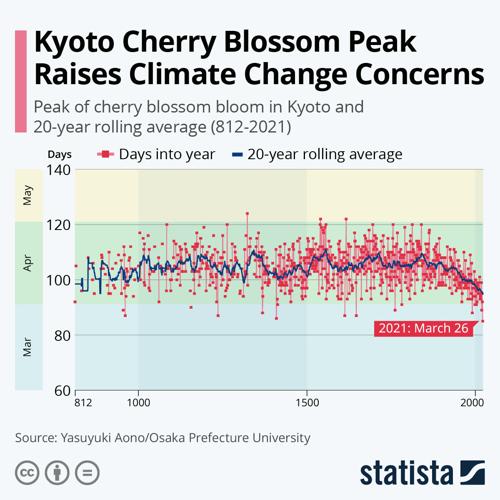
Pear and cherry trees aren’t the ones causing the suffering for those with allergies, but these trees can be used to identify how early spring is starting. One of the longest records we have identifying when trees are blooming is in Japan. There are written records for when the cherry trees bloom in Japan going back to the 800s providing over 1200 years of data.
“What that shows is over the last 20-30 years, the earlier seasons are unprecedented,” explained Dr. Lewis Ziska, a plant biologist who studies the impacts of climate change on plants at Columbia University.

Cherry trees in Japan have been blooming exceptionally early in recent years. Data of these cherry tree bloom times go back over 1200 years.
Locally, the cherry blossoms in Washington, D.C. reached peak bloom on March 17th. This was the second earliest peak bloom date in over 100 years.

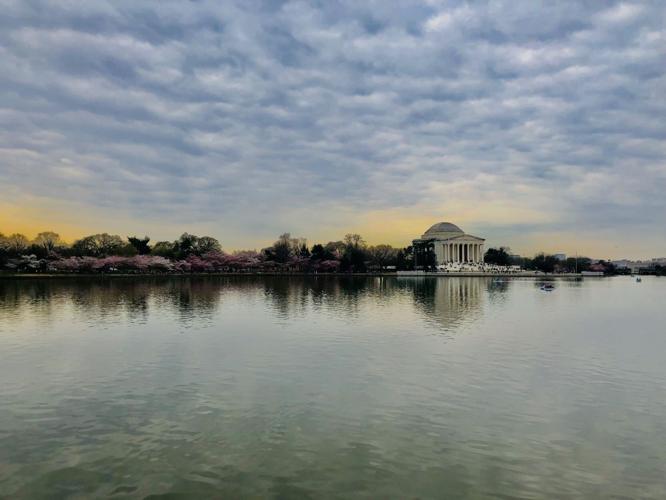
Cherry trees can be seen in bloom along the Tidal Basin in this photo from 2019.
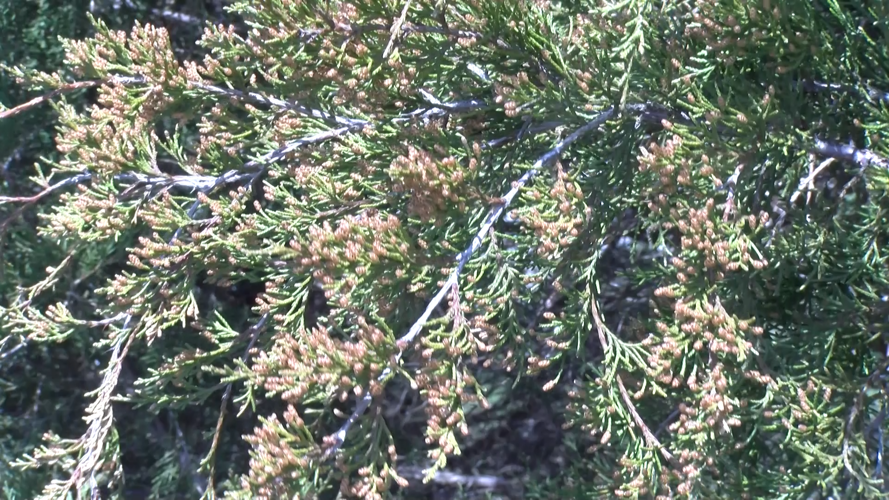
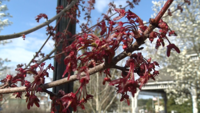
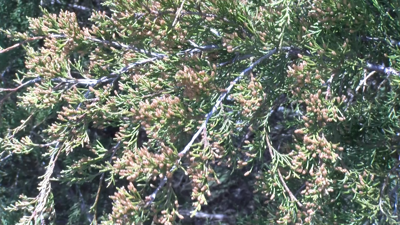
It isn’t just cherry trees and pear trees that are blooming this time of year. Maples, elm, and juniper trees are also in bloom. If you look along a line of trees, it is likely you see a tint of red, a sign of the blooming red maples. These trees are the ones causing problems for people living with allergies due to how they are pollinated.
“They’re not pollinated by insects, they have to be wind pollinated and because wind pollination is literally hit or miss, they have to put out copious amounts of pollen in order to get reproduction,” explained Ziska.

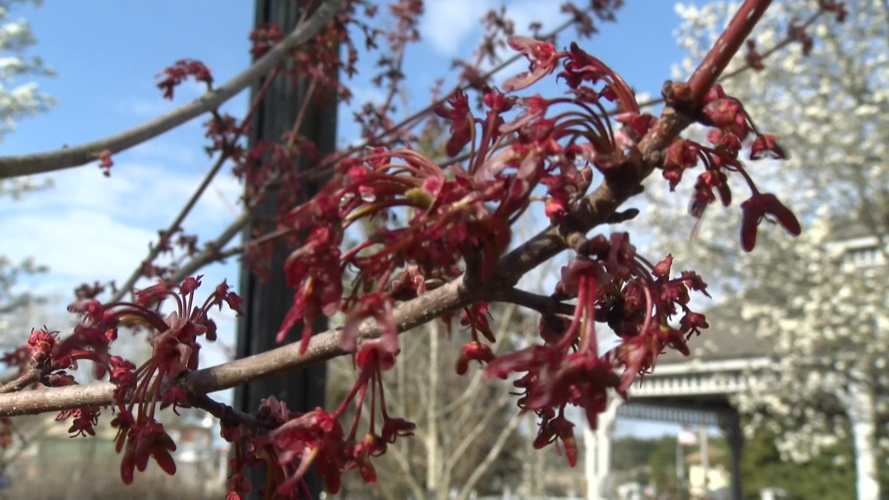
Red maples are also an early blooming tree which causes suffering for those with allergies.
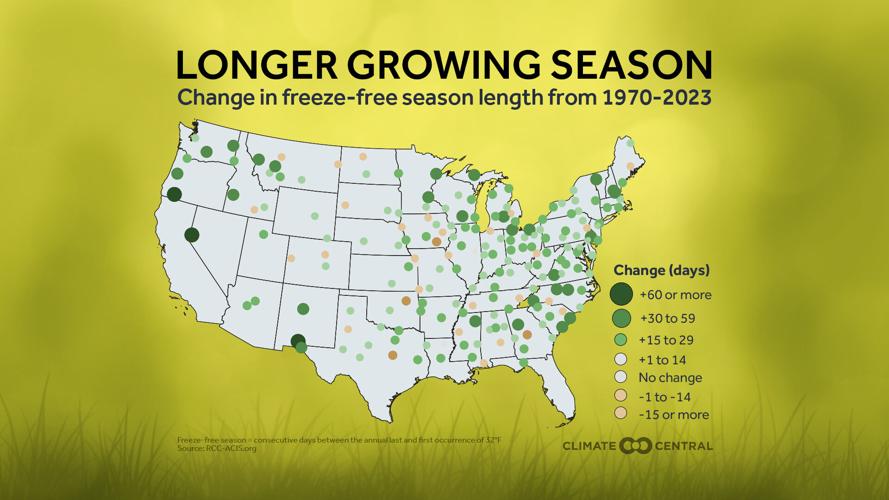
This earlier start to the pollen season with these trees combined with our first frost arriving much later in the fall has resulted in pollen seasons becoming longer. In the fall, the main culprit for allergies is ragweed which will bloom until the first frost.

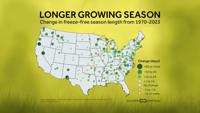
Growing seasons are extending across the country resulting in longer allergy seasons.
Unfortunately for allergy sufferers, pollen season will not only grow longer, it will also worsen. Studies have shown that increasing carbon dioxide levels in our atmosphere and rising temperatures will actually cause plants to produce more pollen daily.
The warmest year on record globally was 2024 and the 10 warmest years on record globally have all happened since 2010. Similar trends can be found locally with each of the top 5 warmest years on record in Salisbury occurring since 2010. The warming trend is expected to continue in the future as increases in greenhouse gases in our atmosphere result in more heat being trapped, warming our planet further.
On Delmarva, warmer and earlier starts to spring have occurred frequently in recent years impacting local farmers, like peach growers. In the future, spring will continue to arrive earlier and earlier and allergy seasons will become longer and worse as the climate continues to warm.
