



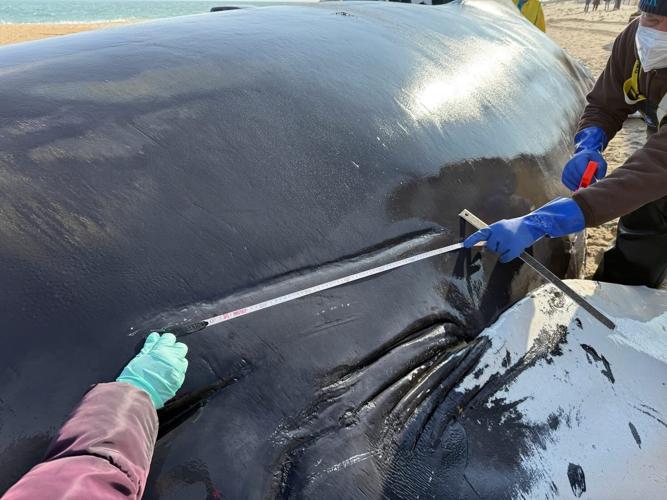
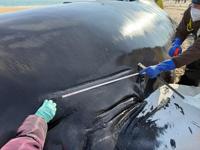

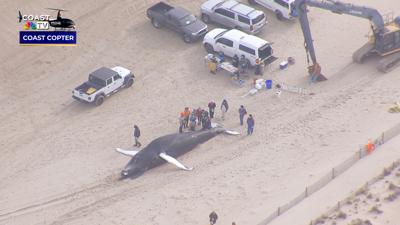
BETHANY BEACH, Del. — A young humpback whale that washed ashore near Bethany Beach Thursday has been examined by the Marine Education, Research and Rehabilitation Institute, who say the whale had subdermal hemorrhaging and a broken jaw, a type of blunt force trauma often associated with a large ship strike.
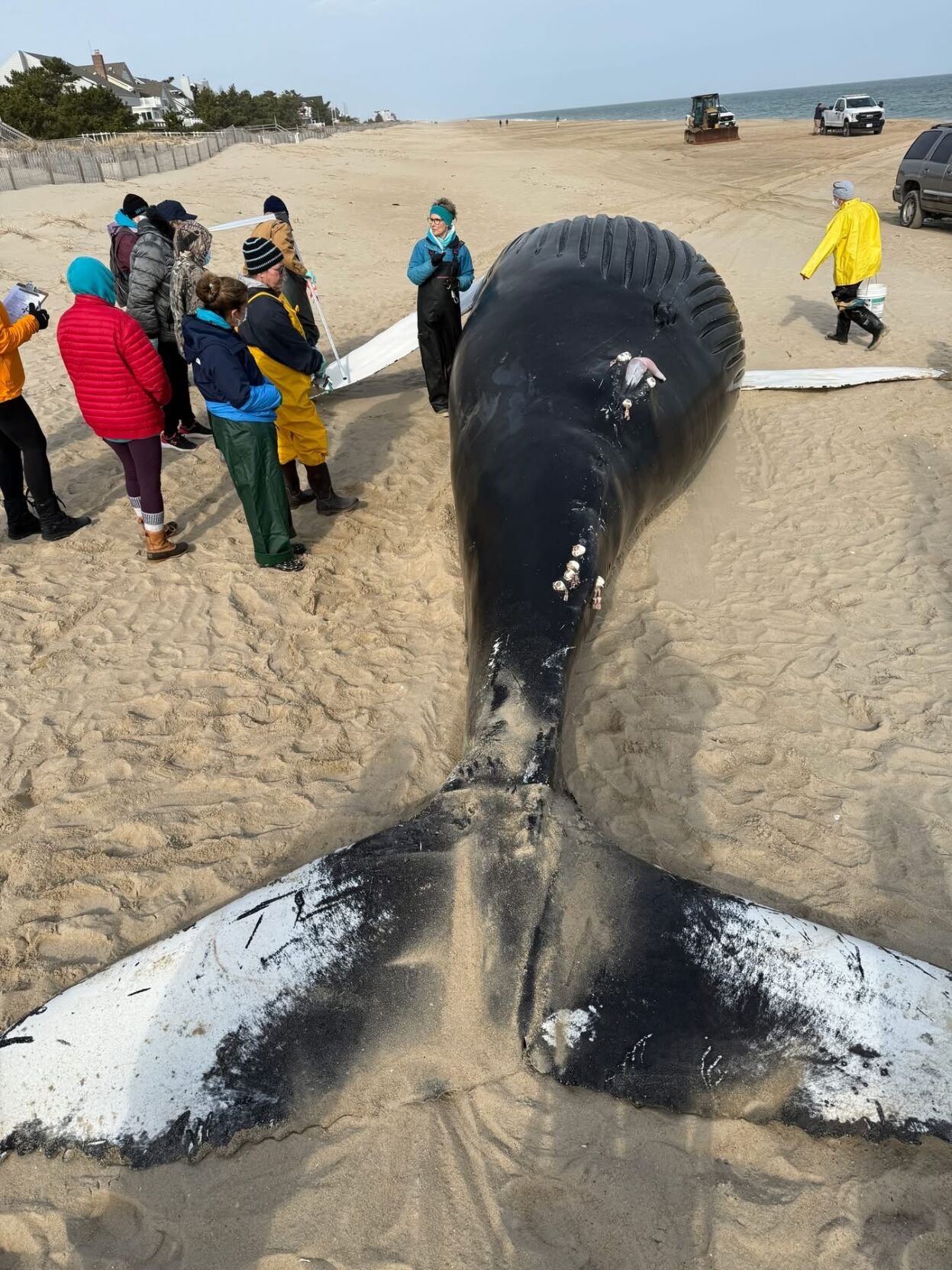
A young 32-foot humpback whale that washed ashore near Bethany Beach likely died from a large ship strike, according to MERR. (MERR)

A young 32-foot humpback whale that washed ashore near Bethany Beach likely died from a large ship strike, according to MERR. (MERR)
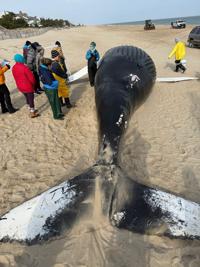
MERR says before arriving in Delaware, the whale was nicknamed "Oil Change" for its large white patch on his fluke and had been entertaining visitors in Cape Cod throughout the summer with his fin-slapping for local tour boats.
According to MERR, the nature of the injuries show that Oil Change was still alive when he was hit.
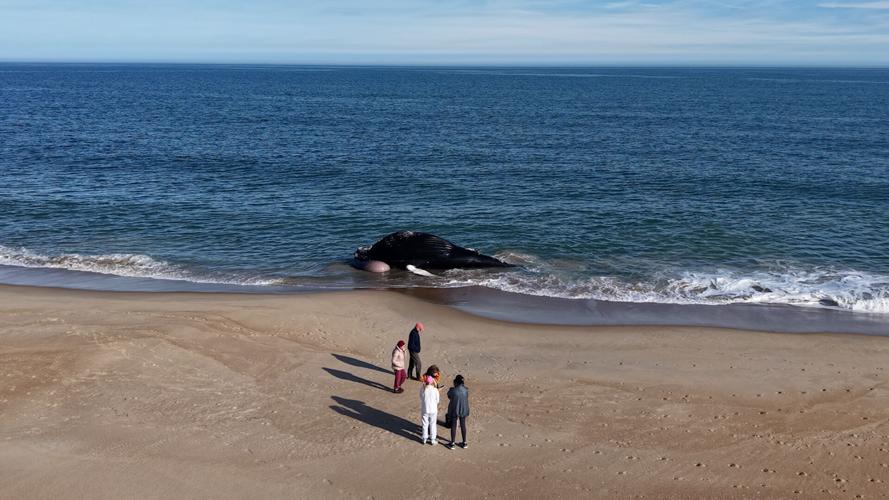
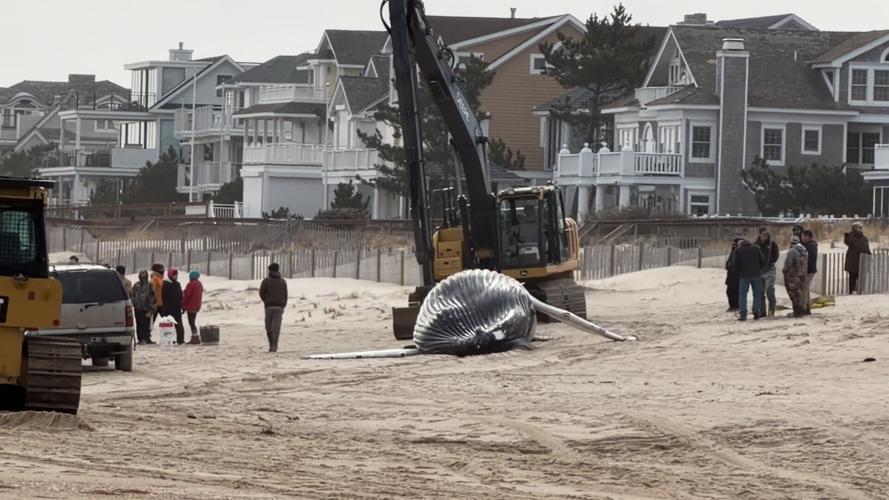
The approximately 32-foot male whale stranded on the beach Thursday near the Ocean Ridge community in Bethany, according to MERR.

A young 32-foot humpback whale that washed ashore near Bethany Beach likely died from a large ship strike, according to MERR.
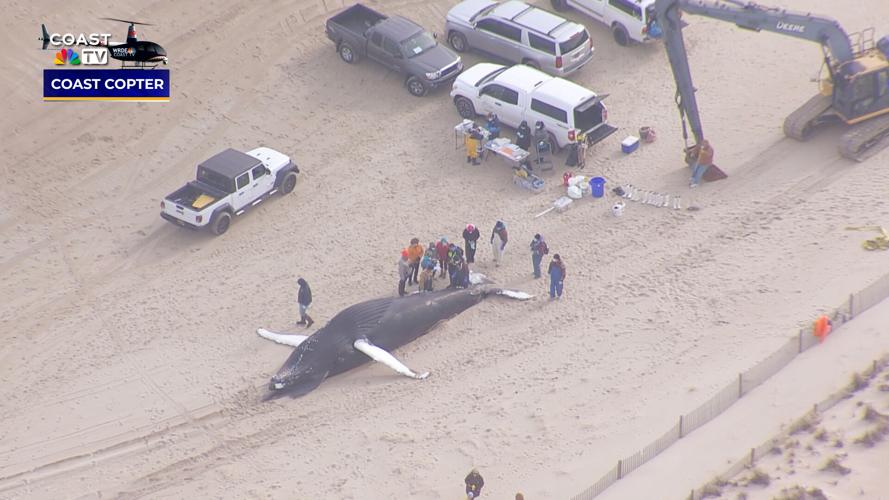
By Friday, crews from MERR, assisted by heavy equipment from DNREC, moved the mammal out of the surf and onto the sand to conduct a necropsy, an autopsy performed on animals.

A young 32-foot humpback whale that washed ashore near Bethany Beach likely died from a large ship strike, according to MERR.
Beachgoers stopped to watch from afar as crews worked around the massive mammal. MERR says this type of examination can help identify whether the death was caused by illness, injury or human-related factors.
“It’s sad, but it’s nature doing its thing,” said Michael Reyen, who was walking along the beach at the time.
Another onlooker, Carol Spencer, said the results of the necropsy would be important.
“If it swallowed something like a plastic bag, that would make me angry,” Spencer said.
MERR says the whale was ultimately buried on the beach, a common practice, since these large mammals cannot be safely towed out to sea. According to the non-profit, burying the whales on the beach allows them to help the ecosystem.
"This was a tragic event, and we would like to thank everyone who helped support us in our examination of this whale," said MERR Executive Director Suzanne Thurman.
In March 2025, a 14-ton humpback whale was buried in the sand after washing ashore at Conquest Road in Delaware Seashore State Park.