




SUSSEX COUNTY, Del. - Radon gas testing is on the rise in Delaware, particularly in Sussex County, as more people move to the area from regions with historically higher radon levels.
Anthony Marioni, who has worked as a radon specialist for 30 years, said he’s seen a steady increase in testing across southern Delaware. He believes the trend is linked to population growth driven by people relocating from states such as Pennsylvania, New Jersey and other parts of the interior Northeast.
“In Delaware, the highest we’ve tested is 1.75 picocuries, and the EPA guideline is 4,” Marioni said. “So we’re elevated, but not crazy elevated. Most of the homes are between 4 and 20 picocuries, which is high, not crazy high.”
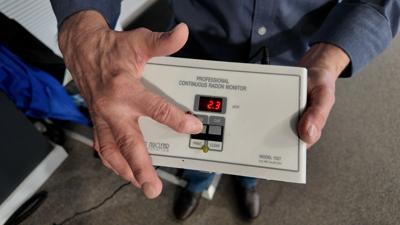
Marioni primarily uses electronic testing, which he says is more reliable than charcoal-based methods. Electronic tests record hourly data, which can help identify spikes during stormy weather.
“That’s a passive test, so all that does is collect the radon onto the charcoal and [get] sent off to a lab,” said Marioni. “The electronic test will give you an hour-by-hour, so if a storm comes through and your radon levels spike, we’ll be able to see that.”
He said at-home test kits can be useful, but he recommends placing them on the ground floor, away from drafts, and ensuring that windows are closed for at least 12 hours before and during the test.
“You don’t want to put it in a kitchen or a laundry room where there’s ventilation sucking air out of the home, or a bathroom,” Marioni said. “Most likely a family room where you’re spending more time, or a bedroom.”
Susan White, a radon consultant, said seasonal changes also play a role in radon levels.
“You’re closed up, it’s cold outside, the house is closed up,” she said. “If you have radon levels, they’re going to be higher than in the spring, summer and fall when you’re in and out of the house.”
People can learn more about radon gas and order a free test kit by visiting the Delaware Department of Health and Social Services website.
