




WASHINGTON (AP) — In a quiet stretch of western Massachusetts stands a sycamore so old it was around when the Constitution was signed. It’s awe-inspiring, with branches bigger than the entire trunks of most trees.
But it’s also notable because it’s an outlier. It is a tree with a majestic presence that dwarfs the common maples and pines nearby — a living reminder of how much old-growth forest has been lost.
In the eastern United States, that rare sense of awe was once supplied in bulk by the American chestnut.
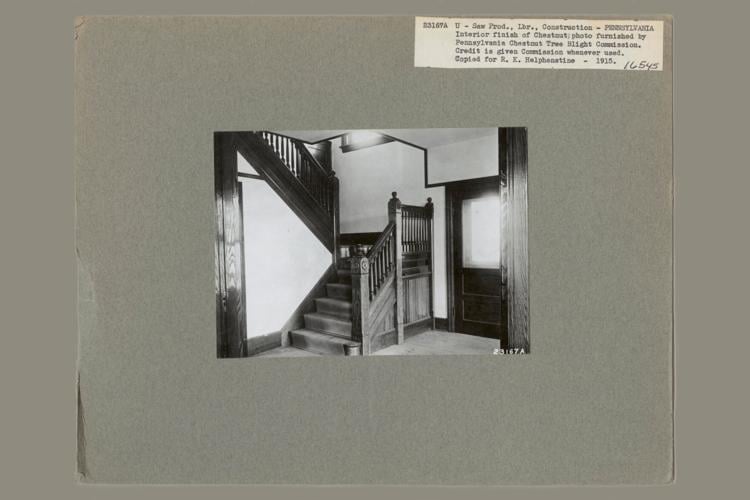
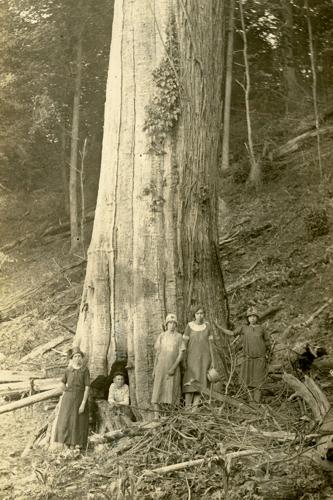
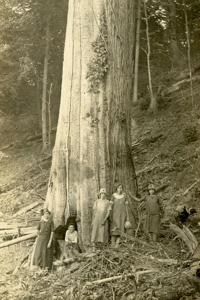
Its presence stunned: mature trees rose above the hardwood canopy supported by trunks wider than a person is tall. It was a centerpiece of the ecosystem, producing so many chestnuts that it boosted the numbers of turkeys, bears and deer that, in turn, spread the trees’ seeds. American chestnut’s straight grain was useful in furniture and it made fenceposts that encircled farms and shrugged off pests and wear.
There were billions of them at the turn of the 20th century, their abundant fruit moved by railcar to cities for sale on street corners. We still sing about them during the holidays.
And then they started dying.
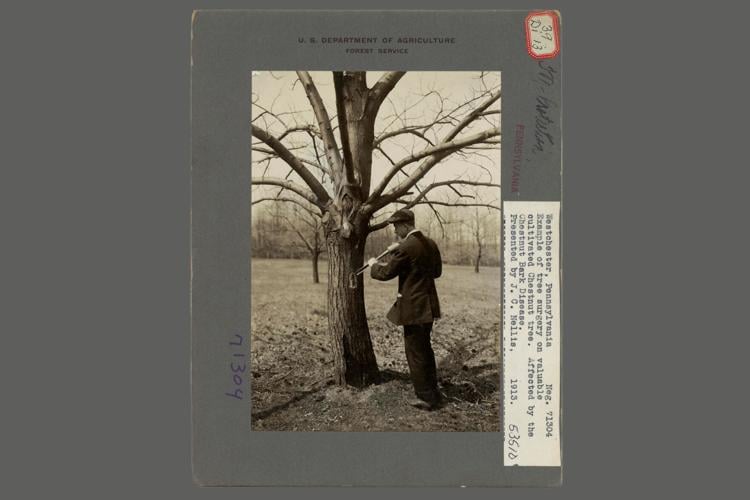
It was disease that forever changed the American landscape. A deadly airborne fungal blight coupled with a lethal root rot that killed them by the millions. By the 1950s, the tree was functionally extinct.
That was long enough ago that few remember what it was like to live among them. But what they once offered isn’t forgotten. Their size still impresses in old photos. Associations are dedicated to their story. And to bringing them back.
Another type of chestnut, the Chinese chestnut, had been introduced to the United States for its valuable nuts. It doesn’t grow as tall, but it can resist disease.
Arborists have tried to breed the advantageous, disease-resistant attributes into the American chestnut. That has turned out to be tremendously hard. Simple breeding techniques don’t work well, and recent efforts to sequence the DNA of the trees reveals why — their desirable traits are scattered across multiple spots along their genome.
But the DNA sequence also provides a map to breed trees that are more likely to survive.
Researchers hope in the coming decades, there will be enough healthy trees for the species to not need humans, to once again rely on the meanderings of bears and forgetfulness of squirrels.
This story is part of a recurring series, “American Objects,” marking the 250th anniversary of the United States. For more stories on the anniversary, click here. The Associated Press receives support from the Walton Family Foundation for coverage of water and environmental policy. The AP is solely responsible for all content. For all of AP’s environmental coverage, visit here.
